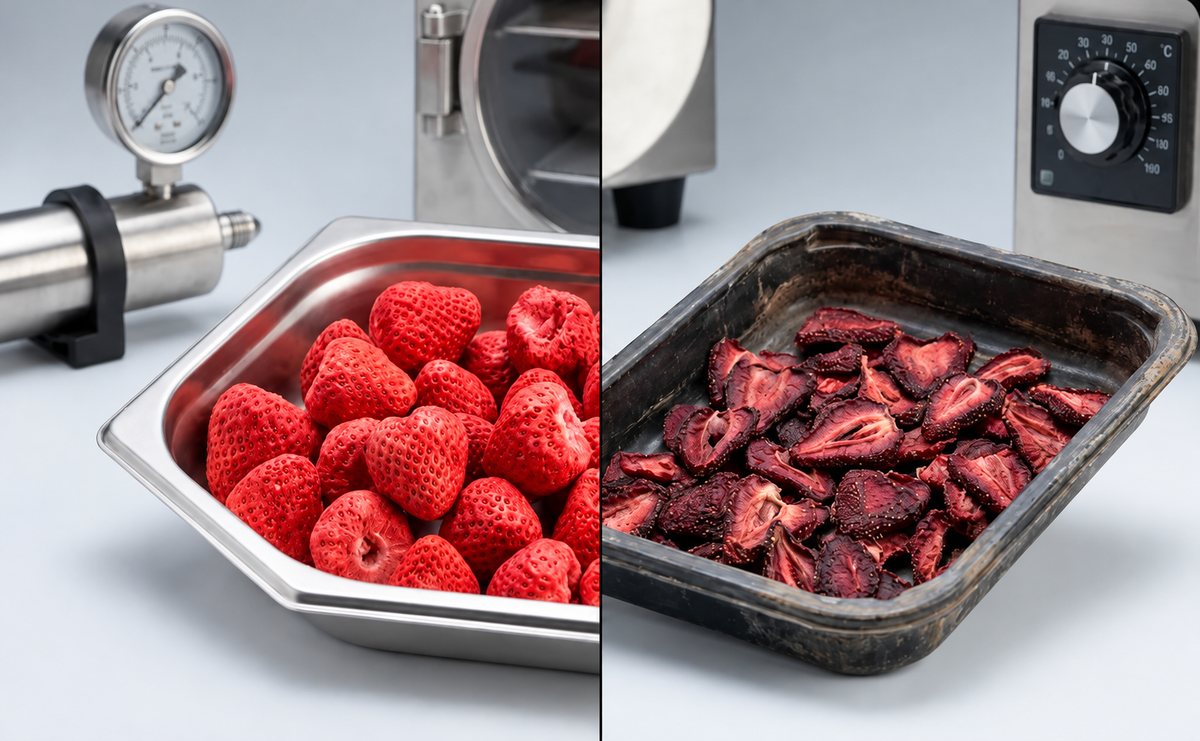
Freeze-dried or dehydrated: which is the better option? Whether you're preparing meals for hiking, building a food supply, or simply preserving your food for longer, both methods have compelling advantages.
Although they both rely on removing water, freeze-drying and dehydration use different processes, which affect the texture, taste, nutritional value, and shelf life of food.
So, what's the difference between freeze-dried food and dehydrated food? Which one retains more nutrients? And which option should you choose for your next adventure?
Here's everything you need to know to make the right choice.
What's the difference between freeze-drying and dehydration?
The main difference lies in the method used to remove water from food.
Freeze-drying involves freezing food and then removing the water in a vacuum through a process called sublimation. This process generally preserves food's structure and some of its nutritional qualities better.
Traditional dehydration primarily uses heat and air circulation to evaporate water. More accessible, it can preserve a wide variety of foods, but it changes their texture more.
Both methods extend food shelf life by reducing the water available for microorganisms to grow.
Comparison table: freeze-dried vs. dehydrated foods
| Criterion | Freeze-dried foods | Dehydrated foods |
|---|---|---|
| Method | Freezing and vacuum sublimation | Water evaporation, generally using heat |
| Shelf life | Potentially very long, depending on the product and its packaging | Varies depending on the product, drying, and packaging |
| Nutritional value | Generally preserves certain heat-sensitive nutrients better | May result in greater losses of heat-sensitive vitamins |
| Texture | Light, porous, and often closer to the original after rehydration | Generally denser, firmer, or chewier |
| Taste | Generally preserves original flavors well | May concentrate or alter certain flavors |
| Weight | Very light | Light |
| Rehydration | Generally quick | Varies, sometimes longer |
| Cost | Usually higher | Generally more affordable |
| Home production | Requires specialized equipment | Possible with a dehydrator or suitable oven |
| Uses | Complete meals, hiking, camping, food supply | Dried fruit, snacks, vegetables, cooking ingredients |
In summary, freeze-drying is particularly useful for preserving food structure and making it easy to prepare complete meals, while dehydration is an affordable and accessible option for preserving ingredients and making snacks.
The best choice depends mostly on the intended use.
What is freeze-dried food?
Freeze-dried food is food from which most of the water has been removed through a process of freezing and vacuum drying.
Unlike traditional dehydration, freeze-drying removes frozen water without it passing through a liquid state.
How does freeze-drying work?
The process involves four main steps:
- Preparation: the food is prepared, cooked, or cut up depending on the product.
- Freezing: it is frozen at a low temperature to solidify the water it contains.
- Sublimation: in a vacuum, the ice passes directly from a solid to a gaseous state through controlled heat.
- Packaging: the food is placed in suitable packaging to limit its exposure to moisture and oxygen.
By removing much of the water while preserving the food's structure, this process produces products that are particularly light and easy to transport.
Freeze-dried foods can be eaten as they are when the product allows, such as some fruits, or rehydrated with water to regain a texture close to their original state.
This is what makes freeze-dried meals particularly convenient for hiking, camping, and travel.
To learn more, discover how freeze-drying works.
What is dehydrated food?
Dehydrated food is food from which much of the water has been removed, generally through a drying process using heat and air circulation.
Dehydration is an ancient preservation method, used notably for fruits, vegetables, herbs, and certain meat products.
How does dehydration work?
The process is relatively simple.
The food is first washed and cut up, then arranged on trays in a food dehydrator or suitable drying equipment.
Hot air circulates around the food, gradually evaporating its water.
Once sufficiently dry, it is cooled, then stored in suitable containers.
Unlike freeze-drying, which often preserves a porous structure, dehydration can cause food to shrink and change its texture.
This is what gives dried mangoes their soft and chewy texture, very different from that of freeze-dried mangoes, which are generally light and crispy.
Dehydration is particularly useful for:
- Preparing dried fruit and snacks.
- Preserving vegetables, mushrooms, and herbs.
- Reducing food waste.
- Preparing certain low-budget camping ingredients.
 |
 |

|
|
Fresh mango :
15 g, 100% of nutrients |
Dehydrated mango :
3 g, 70% of nutrients |
Freeze-dried mango : 1.5 g, 98% of nutrients |
Freeze-drying vs. dehydration: the 6 main differences
Beyond their manufacturing method, several criteria can influence your choice between freeze-dried and dehydrated foods.
1. Nutritional value: which method retains more nutrients?
One of the main advantages of freeze-drying is its ability to preserve many nutritional components through a relatively low-temperature treatment.
Certain vitamins, especially vitamin C, are heat-sensitive and can degrade during traditional drying processes.
According to a scientific review published in the journal Foods, freeze-drying generally preserves the nutritional and sensory qualities of fruits and vegetables better than conventional hot-air drying.
However, this does not mean that dehydrated foods are bad for your health.
Both methods preserve important nutrients, especially fiber, minerals, and macronutrients.
The actual amount preserved depends on several factors: the starting food, its preparation, the temperature used, the treatment duration, and storage conditions.
There is therefore no universal percentage of nutrients retained by freeze-drying or dehydration.
Finally, for a complete meal, nutritional quality also depends on the recipe itself. A freeze-dried meal is not automatically more nutritious than a dehydrated meal.
2. Shelf life: which foods last the longest?
Freeze-drying and dehydration both extend food shelf life.
By removing water, they reduce conditions favorable to the growth of bacteria, yeasts, and molds.
However, shelf life depends as much on the product and its packaging as on the method used.
Some commercially freeze-dried foods, properly formulated, packaged, and stored, can last up to 25 years, according to the University of Minnesota. However, this is not a duration applicable to all freeze-dried products.
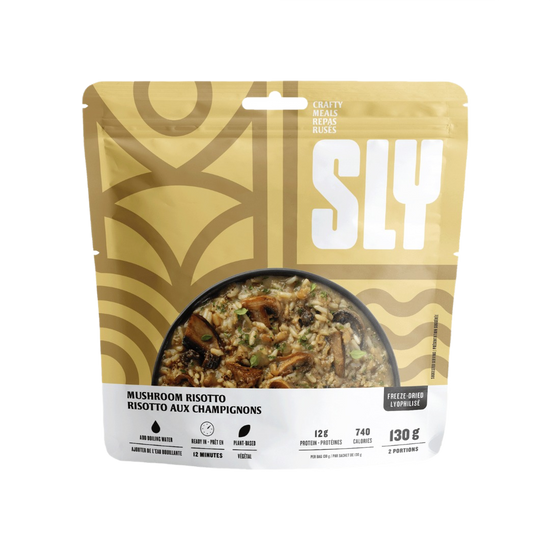
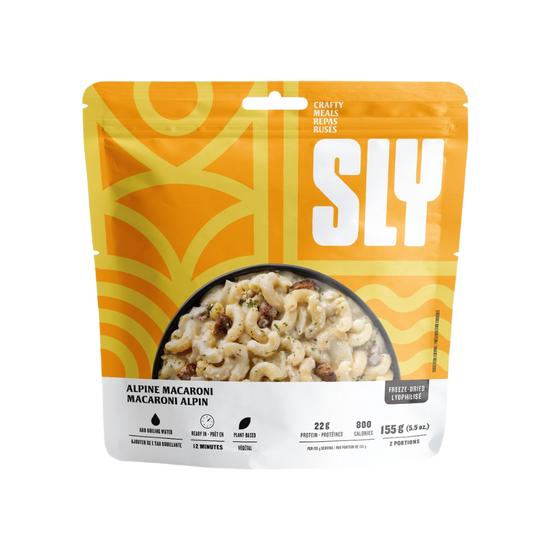
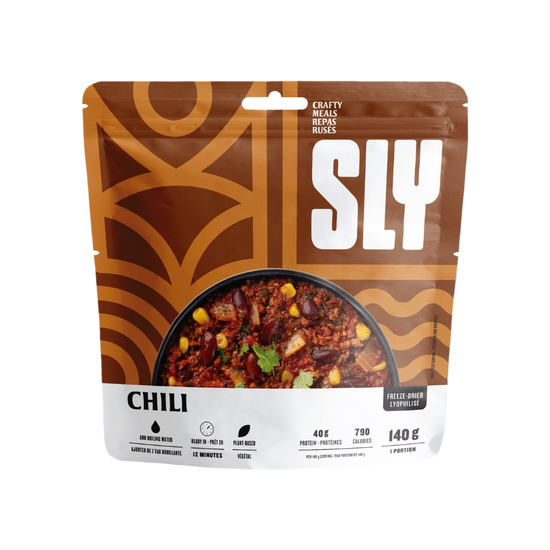
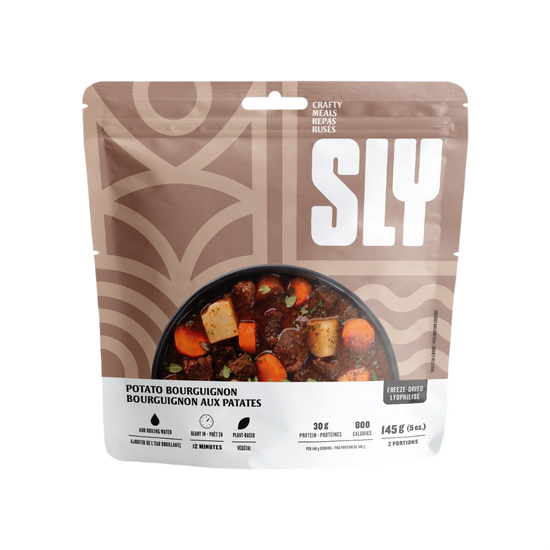
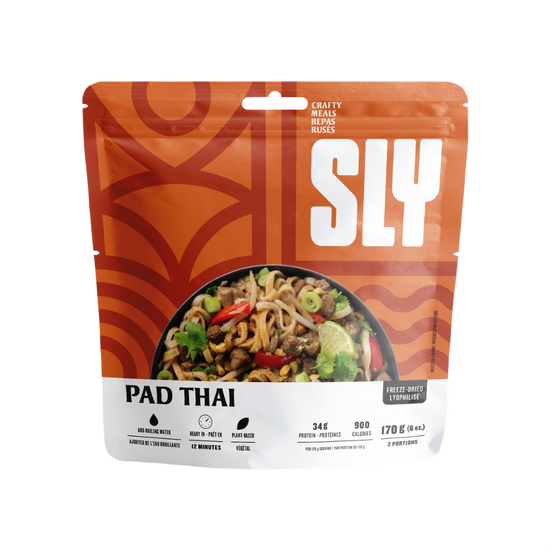
At SLY, our freeze-dried meals last up to 5 years without refrigeration, in a cool, dry place.
For dehydrated foods, shelf life varies considerably. Foods dehydrated at home generally have a shorter shelf life than certain specially packaged industrial products.
The National Center for Home Food Preservation generally recommends storage periods of four months to one year for foods dehydrated at home, depending on their nature and storage conditions.
In any case, it is important to follow the manufacturer's instructions.
3. Taste and texture: which method offers the best result?
The difference between freeze-dried and dehydrated foods is particularly noticeable in texture.
Freeze-dried foods
Freeze-drying generally preserves the food's original structure better.
Once rehydrated, they can regain a texture relatively close to what they had before drying.
For example, freeze-dried vegetables can regain a tender consistency after adding water.
Dehydrated foods
Dehydration often causes a greater change in food structure.
Fruits generally become denser and chewier, while some vegetables can become firm or brittle.
After rehydration, they do not always regain their original texture.
Drying can also concentrate flavors, which can be particularly interesting for certain foods.
Which tastes better?
It all depends on the desired result.
For snacks like dried fruit, the chewy texture of dehydration can be appreciated.
For a prepared meal that you want to retain a texture close to the original, freeze-drying often has an advantage.
4. Rehydration: which method is faster?
Freeze-dried foods generally have a porous structure that facilitates water absorption.
This often allows for quick and relatively uniform rehydration.
Dehydrated foods, whose structure is generally denser, may require more time to regain a tender texture.
However, preparation time depends mostly on the type of food.
Some dehydrated vegetables rehydrate quickly, while other ingredients require prolonged cooking.
For SLY freeze-dried meals, preparation is simple: add boiling water directly to the pouch, mix, and let sit for about 12 minutes.
Since the meal is already cooked before being freeze-dried, you do not need to prepare the different ingredients separately.
Also discover how to rehydrate freeze-dried foods.
5. Weight and price: which option to choose for the outdoors?
When hiking, every gram counts.
By removing much of the water, freeze-drying and dehydration both considerably reduce the weight of food.
Freeze-dried products are particularly light, while dehydrated foods also offer an excellent ratio between weight and the amount of food carried.
The difference is often more in price.
Freeze-drying is generally more expensive, as it requires specialized equipment and a complex manufacturing process.
Traditional dehydration is often more affordable and can even be done at home with relatively accessible equipment.
For hikers who want to prepare their own snacks or ingredients, dehydration is therefore an attractive option.
For those who prefer complete, compact, and quick-to-prepare meals, freeze-dried meals may be worth the extra investment.
6. Environmental impact: which method is the most eco-friendly?
Both methods can help extend the shelf life of food and reduce certain types of food waste.
However, their energy requirements differ.
Traditional dehydration generally uses simpler equipment, while freeze-drying requires refrigeration, a vacuum, and a controlled energy supply.
A review study on the freeze-drying of fruits and vegetables highlights that this technique is generally more energy-intensive than hot-air drying.
But the energy consumption of the process alone is not enough to determine the total environmental impact of a food item.
Its production, packaging, transport, storage, and potential waste must also be considered.
It would therefore be misleading to claim that one method is consistently more eco-friendly than the other.
Freeze-dried or dehydrated food: which should you choose based on your needs?
Now that we have compared the two methods, which should you choose?
The answer depends mainly on how you plan to use it.
| Your needs | Our recommendation | Why? |
|---|---|---|
| Multi-day hike | Freeze-dried meals | Lightweight, compact, and easy to prepare |
| Outdoor snacks | Dehydrated or freeze-dried foods | Easy to carry and eat |
| Camping with limited equipment | Freeze-dried meals | Simple preparation with hot water |
| Storing fruits and vegetables at home | Dehydration | An accessible and generally affordable method |
| Emergency food supply | A combination of both, with ready-to-eat foods | Helps diversify your supplies |
| Quick everyday meals | Freeze-dried meals | Prepared meals available without refrigeration |
| Small budget | Dehydrated foods | Generally more affordable |
For hiking and camping
Freeze-dried meals are particularly suited for adventures where space, weight, and preparation time are limited.
They allow you to carry a prepared meal without having to carry its water.
All you need is drinking water and a way to heat it.
Dehydrated foods are also excellent additions, especially for snacks, dried fruit, or ingredients you want to add to your meals.
For storing food at home
Dehydration is a good option for preserving fruits, vegetables, or herbs you want to use later.
It is particularly appealing if you enjoy cooking and preparing your own food.
Freeze-drying may be more appealing for storing complete meals for several years, but it requires specialized equipment when done at home.
For building a food supply
Both methods can have a place in a long-term food supply.
Freeze-dried meals provide prepared dishes that are easy to store.
Dehydrated foods offer more options for preserving certain staple ingredients.
In an emergency, however, it is also essential to have foods that can be eaten without water or cooking.
For more information, see our list of essential emergency foods for 72 hours.
 |
 |
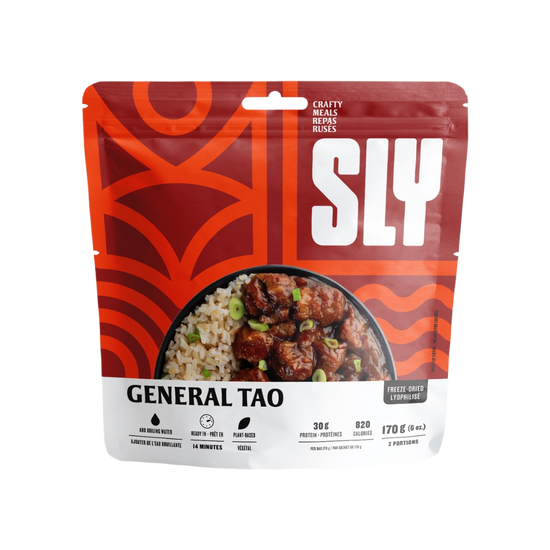
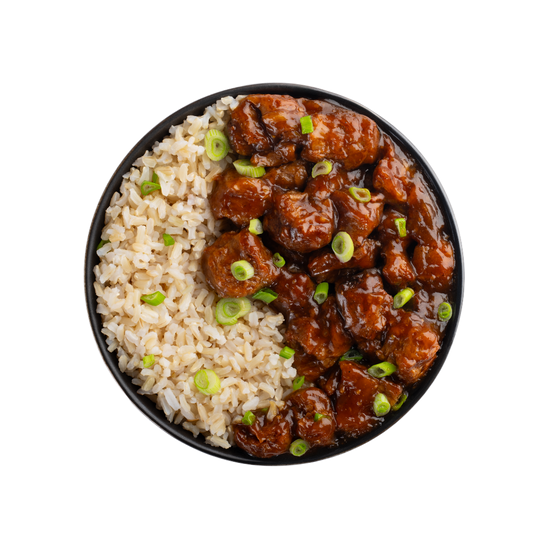
| SLY General Tao freeze-dried (dry state) | SLY General Tao rehydrated |
Why choose SLY freeze-dried meals?
At SLY, we believe that a convenient meal should not compromise the pleasure of eating.
That is why we chose to fully cook our recipes before freeze-drying them.
Unlike a preparation made from assembled dry ingredients, each SLY meal is first cooked as a real dish.
It is then frozen and freeze-dried to remove most of the water while preserving its flavor and texture as best as possible.
The result? Lightweight, nutritious, and easy-to-prepare meals, whether you are hiking, camping, or simply at home.
What sets our meals apart:
- Recipes fully cooked before freeze-drying.
- Simple, recognizable ingredients.
- Compact meals that require no refrigeration before opening.
- Preparation in about 12 minutes with boiling water.
- Shelf life of up to 5 years.
Whether you are heading out on a long adventure or simply want to have a few convenient meals on hand, SLY freeze-dried meals offer a tasty and easy-to-use solution.
Discover SLY freeze-dried meals
Frequently asked questions about freeze-drying and dehydration
What is the main difference between freeze-dried and dehydrated food?
The difference lies in the drying process. Freeze-drying removes water from frozen food through sublimation in a vacuum, while traditional dehydration primarily uses heat and air circulation to evaporate water. These two methods affect the texture, taste, and preservation of food differently.
Is freeze-dried food healthier?
Not necessarily. Freeze-drying generally preserves certain heat-sensitive nutrients, such as vitamin C, better. However, dehydrated foods can also be nutritious. Nutritional quality depends mainly on the ingredients, the recipe, and the processing method used.
Which method preserves food the longest?
Freeze-drying generally provides a very long shelf life when food is properly dried, packaged, and stored. However, the exact duration depends on the product. Some commercially freeze-dried foods can last for several decades, while SLY meals last up to 5 years.
Do dehydrated foods lose their nutrients?
Dehydration can lead to the degradation of certain heat-sensitive vitamins, but it preserves many important nutritional elements. Losses vary depending on the food and drying parameters. It is therefore incorrect to assume that all dehydrated foods have lost a large part of their nutritional value.
Can you freeze-dry food at home?
Yes, but freeze-drying requires specialized equipment capable of freezing food and creating a vacuum environment.
A home freezer or traditional dehydrator cannot reproduce this process. Freeze-drying also does not sterilize food: good food safety practices must be followed before, during, and after processing.
Should water be added to freeze-dried and dehydrated foods?
It depends on the product.
Some freeze-dried or dehydrated fruits can be eaten directly as a snack.
Freeze-dried meals generally require rehydration with drinking water, often hot. Dehydrated foods may also require water and sometimes additional cooking.
Is freeze-dried food better for hiking?
Freeze-dried meals are particularly convenient for hiking thanks to their lightness, small size, and ease of preparation.
However, dried fruit, nuts, and other dehydrated foods remain excellent options for snacks or for preparing your own meals.
Combining both often provides a varied diet suited to the energy needs of the adventure.
Conclusion: freeze-dried or dehydrated, which is the better choice?
Freeze-drying and dehydration are two effective methods for extending the shelf life of food, each with its advantages.
Freeze-drying stands out for its ability to preserve the structure of food, facilitate rehydration, and produce meals that are particularly easy to carry.
Dehydration, on the other hand, offers a more accessible and affordable method for preserving many ingredients and preparing snacks.
For hiking, camping, or quick meals, freeze-dried products are a particularly attractive solution.
For storing food at home or preparing snacks on a budget, dehydration remains an excellent option.
The best choice is therefore not necessarily one or the other, but the one that best suits your needs.
Explore SLY freeze-dried meals and prepare for your next adventure
Sources and references
To learn more about the subject, here are some scientific and institutional references on food preservation methods:
- University of Minnesota Extension — Preserving Food at Home: Freeze-Drying : principles of freeze-drying, storage, and food safety.
- National Center for Home Food Preservation — Packaging and Storing Dried Foods : recommendations on storing and preserving dehydrated foods.
- Foods — Novel Efficient Physical Technologies for Enhancing Freeze Drying of Fruits and Vegetables: A Review : scientific review on the quality of freeze-dried foods and the energy requirements of the process.
- SLY — Frequently Asked Questions : preparation and shelf life of SLY meals.